The first minute of a podcast interview does not need to be clever. It needs to help the listener understand why this conversation is worth their time, help the guest feel ready to speak, and give the host somewhere real to begin. When those three jobs are clear, the opening feels natural instead of scripted.
Many hosts treat the beginning as a formality: welcome, show name, guest bio, then a vague invitation to talk. That routine can use up the most attentive moment of the episode before the conversation has made a promise. A stronger opening starts with the listener’s curiosity, introduces the guest through the subject at hand, and moves into a question that has enough shape to produce a story.
Start with the reason this conversation exists
Before you write a word, complete one sentence: “By the end of this episode, the listener will understand…” The ending might be a decision, an experience, a difficult change, or a piece of craft the guest knows unusually well. That sentence gives the opening a center.
For example, an episode with a nonprofit leader is not automatically about the organization’s history. It may be about the moment a community need changed, the choice that made a program work, or the question the leader still cannot answer easily. An episode with a founder might be about the work behind a decision, not simply their résumé. Choose the idea that makes a listener lean in.
This approach also prevents the host from promising more than the interview can deliver. If the conversation is a candid look at one team’s experience, say that. If it is a practical discussion of a process, name the process. Clear framing gives listeners a fair invitation and gives you a useful line to return to if the conversation starts to wander.

Prepare a short opening, not a long preamble
Most interview openings need only four pieces: the show identifier, the episode promise, a relevant introduction to the guest, and the first question. You do not need all four at full length every time. A regular listener may only need a brief show identifier. A guest with a familiar public profile may need less biography. The episode promise and first question do the essential work.
Try this shape: “You’re listening to [show name], where we explore [show promise]. Today, we’re looking at [episode question or tension]. My guest, [name], has [experience that connects directly to that question]. I want to start with [specific first question].”
That is a frame, not a speech to copy verbatim. Remove anything that makes the host sound less like themselves. Use plain language. If the sentence needs three qualifiers to be accurate, the episode promise may still be too broad. The best opening feels like a listener has arrived just as an interesting conversation is about to begin.
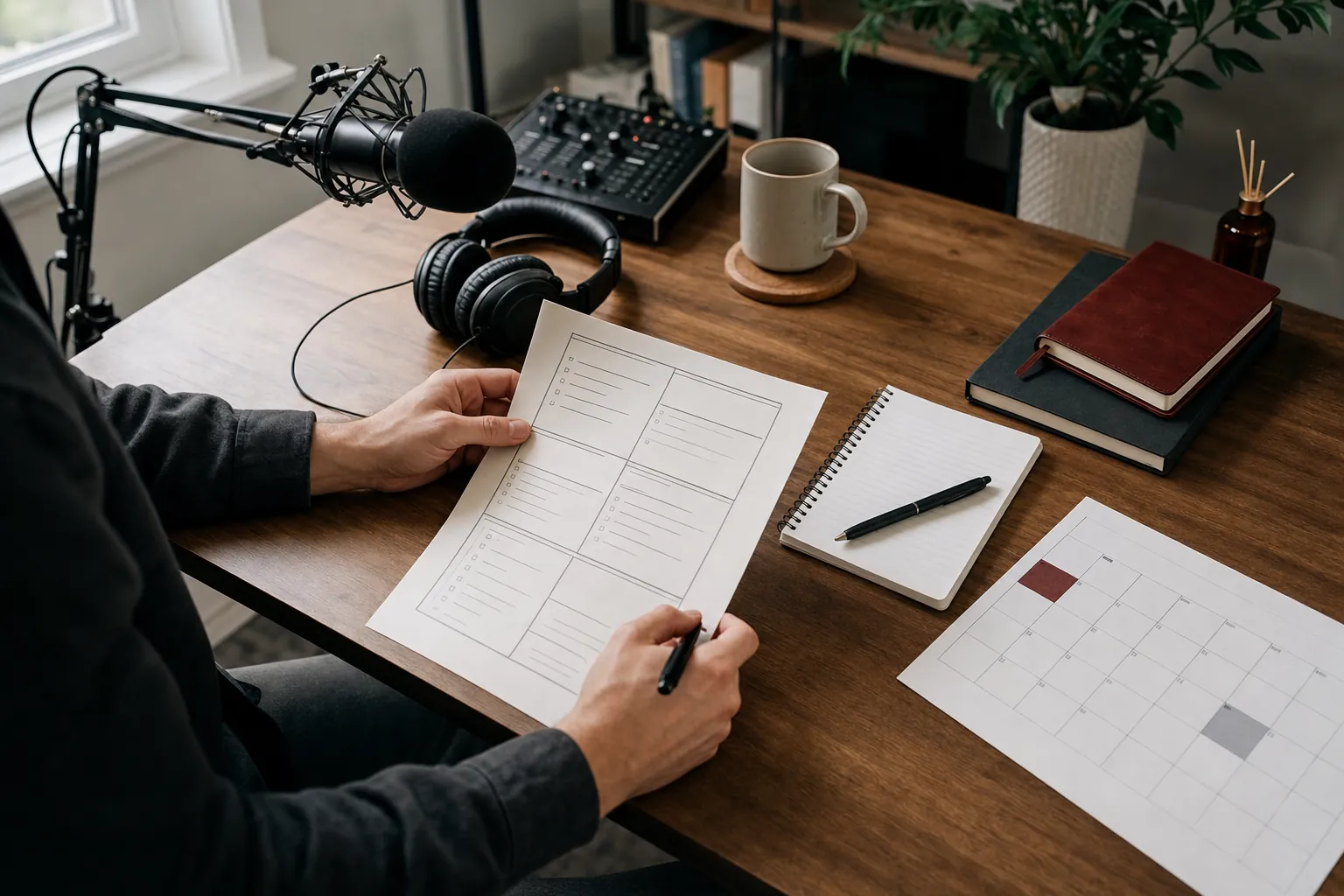
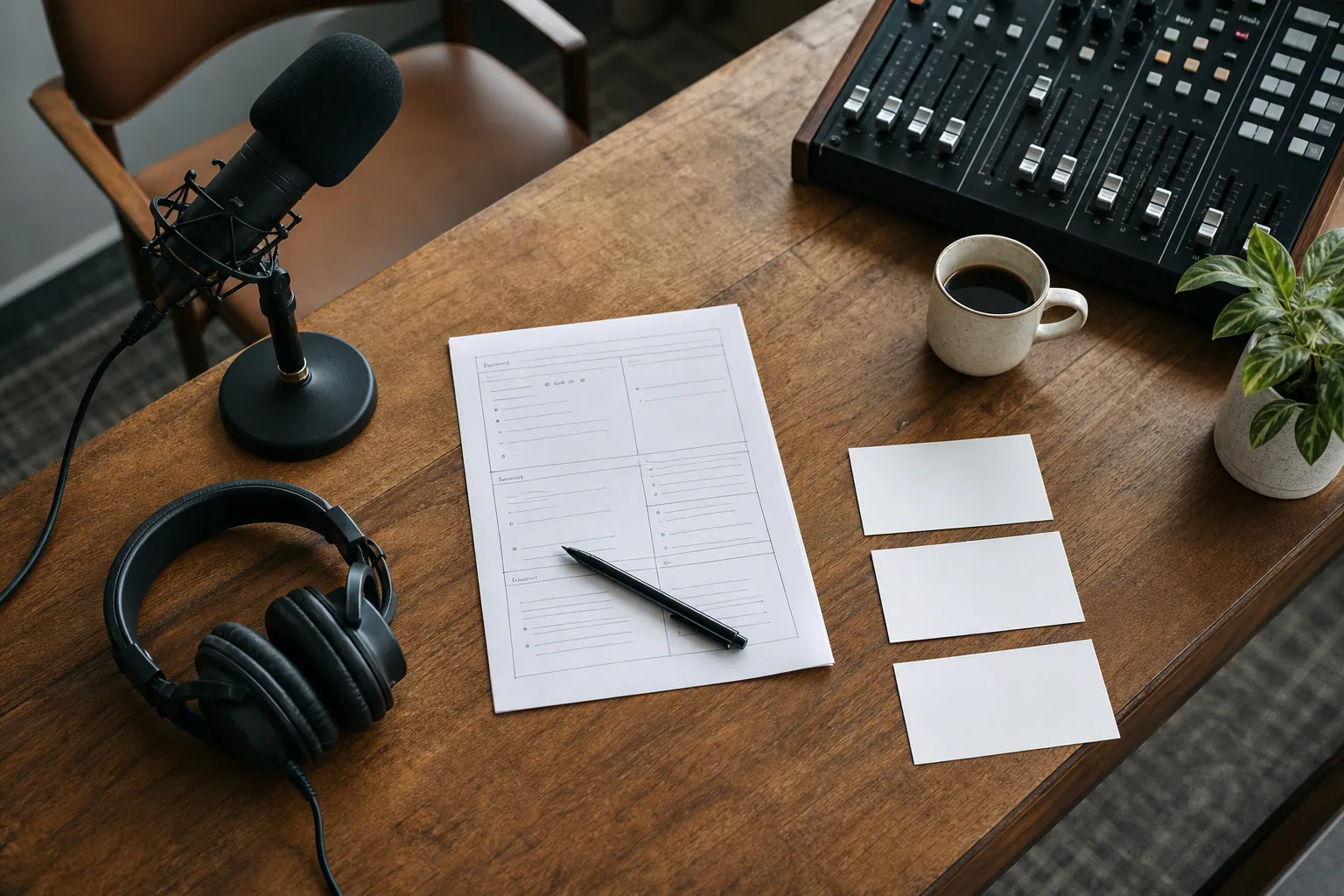
A simple outline is useful because it lets you test the order before a guest is present. Mark’s podcast outline template can help you identify the opening, the essential themes, and the close without turning every response into a cue on a page.
Introduce the guest through the listener’s need
A full biography can establish authority, but it rarely creates energy. Listeners do not need to hear every past role before they understand why this person belongs in today’s conversation. Pick one or two details that connect the guest’s experience to the question you have just raised.
Instead of “She has held leadership positions for twenty years,” try “She led the team that had to decide what to do when demand changed overnight.” Instead of listing books, awards, and job titles, name the perspective that the listener is about to hear. There will be time for the rest of the story if it matters.
Check names, titles, pronunciations, and any sensitive context before recording. It is considerate and it keeps the first moments from being spent on corrections. A short pre-recording note also helps a guest know whether you will read an introduction, start with a cold question, or ask them to introduce themselves in a particular way. The aim is not to surprise anyone. It is to make the real conversation feel prepared enough to breathe.
For a fuller preparation process, Mark’s guide to briefing podcast guests covers the practical details that help a guest arrive settled, from expectations and timing to recording advice.

Ask a first question that gives the guest a runway
The first question should not be the hardest question. It should help the guest find their voice and give the listener a concrete place to enter. Broad invitations such as “Tell us about yourself” put too much work on the guest and often produce an unfocused summary. A narrow, open question produces a scene, a turning point, or an opinion worth following.
Useful opening questions often begin with a moment: “What was happening when you realized this approach was no longer working?” They can begin with an origin: “Where did this problem first become visible to you?” Or they can begin with a contrast: “What do people assume about this work that you wish they understood differently?”
Choose one question, then be quiet long enough to hear the answer. A host who rushes to affirm, explain, or launch the next question can cut off the detail that makes an interview feel alive. Podcast interview guidance from Captivate makes a useful related point: many hosts record the listener-facing introduction separately, which allows the recording itself to begin more comfortably and gives the finished opening room to reflect what the interview actually delivered.
If you need more ways to build questions that prompt stories rather than short answers, use Mark’s list of podcast interview questions. The question list is not a substitute for listening, but it can give you a better starting point than trying to improvise the whole route.
Let the guest hear the first question before the recording starts
There is no loss of spontaneity in telling a guest the broad direction of the opening. In fact, it often makes the recording more useful. A guest who understands the subject and the listener can choose a clearer example, avoid spending the first answer on background, and arrive ready to speak in full sentences.
Share the central question or the first theme, not every follow-up. Explain whether the episode will open with a short host introduction, a clip from later in the conversation, or the guest’s own voice. Ask whether there are any details that need careful wording. That small exchange makes the host sound more confident because everyone knows the room they are entering.
For remote recordings, cover the practical basics as well: where to join, when to arrive, why headphones help, and how you will handle a connection problem. A guest who is worrying about their microphone cannot give full attention to the opening question. Preparation protects the conversation, not just the sound.
Keep the advance note short enough that it does not become homework. A guest does not need a list of thirty questions or a demand to rehearse answers. They need to know the audience, the point of the episode, the practical format, and the first place you intend to begin. That is enough context to replace uncertainty with focus while leaving room for discovery once the recording starts.
It also gives you a final chance to check the listener’s point of view. If you cannot explain the episode in a few clear sentences to the guest, the opening will probably feel vague to the audience. Rewrite the promise before you record, rather than trying to repair it with a longer introduction later.
Record the final introduction after the interview when it serves the episode
The opening you plan before a conversation and the opening the listener needs can be slightly different. A guest may tell an unexpected story. A question may reveal a more useful angle. An answer you expected to be central may turn out to matter less than the exchange that follows it. Recording the final introduction afterward lets you make a promise based on what the episode actually contains.
Listen back for a moment that captures the value of the conversation. It may be a realization, a practical example, a disagreement, or a sentence that changes the way the subject sounds. Then write a short introduction that leads the listener toward that moment without giving away the whole exchange.
This is especially helpful for edited interviews. You can make the opening match the final structure, rather than asking the edit to honor a script written before either person had discovered what mattered. Mark’s podcast introduction guide explains how to separate a repeatable show identifier from the episode-specific opening that gives a listener a reason to stay.

Use a calm sequence when the conversation begins
A strong beginning has a natural rhythm: orient the listener, welcome the guest, ask the first specific question, and listen. Do not rush to prove that you have researched everything. Do not make the guest perform their credentials. Do not make the listener wait for the point.
If the first answer is shorter than you hoped, follow up with a request for a moment, a choice, or an example. “What did that look like in practice?” is often enough. If the guest speaks at length, let them finish, then name the thread you want to explore further. Your job is to guide the conversation toward useful detail, not to read every prepared question in order.
That balance is where preparation pays off. When you know the listener’s question and the guest’s relevant experience, you have a clear way to decide which follow-up is worth taking. The conversation can remain human because the host is not searching for its purpose in real time.
When a better opening needs editorial support
A great first question is part of a larger process. The strongest interview episodes also need a clear audience, thoughtful guest preparation, a host who can listen and follow up, and an edit that keeps the most useful moments in view. Those are editorial choices as much as technical ones.
Mark brings broadcast, public-radio, production, and teaching experience to that work. If you are building an interview show for an organization or refining an existing one, his podcast consulting can help clarify the episode structure and host approach. Ongoing production support can carry the preparation, edit, and release process so the host can stay focused on the person across the microphone. To talk through a specific show, start with a free consultation.
A quick opening checklist
- Name the listener question before you write the introduction.
- Give the episode a clear, honest promise.
- Introduce the guest through the experience that matters to this topic.
- Check names, titles, and sensitive details before recording.
- Ask one specific question that invites a story.
- Let the guest finish before you reach for the next question.
- Record or revise the listener-facing introduction after the interview when the final episode needs it.
Frequently asked questions
How should I start a podcast interview?
Start by telling listeners why this guest and this subject matter now, then ask one easy but specific question. A short opening gives the listener direction and lets the guest settle into a real conversation without a long recital of credentials.
Should I introduce a podcast guest before recording?
Usually, no. A guest introduction is for the listener, not a ceremony the guest needs to sit through. Record it separately when that makes the conversation more relaxed, or keep it brief and move directly to the first question.
What is a good first question for a podcast guest?
Choose a question that is specific, connected to the episode, and easy to answer with a story. “What changed when you first realized this mattered?” is usually more promising than asking someone to summarize their entire background.
How long should a podcast interview introduction be?
Keep it only as long as it takes to orient a new listener. For many interview episodes, that means a handful of purposeful sentences, followed by the first real question. The introduction should create momentum, not delay it.