The best podcast interview questions do not sound like questions at all. They sound like a listener's real curiosity, asked by someone who has done enough preparation to notice where the useful story begins. A strong guest helps, but the host creates the conditions for a conversation people will want to hear to the end.
This guide is for hosts, organizations, and experts planning an interview-led podcast. It includes a practical way to prepare, a bank of questions worth adapting, and a simple approach to keeping the recording focused without making it stiff.
Start with the listener's question
Before researching a guest, decide what the episode needs to give the listener. It might explain how someone made a difficult decision, reveal the work behind an achievement, make a complex subject understandable, or let a guest tell a story in their own words. The answer gives every question a job.
Without that focus, a host can collect a long biography and still miss the point. An opening such as "Tell us about yourself" is easy, but it asks the guest to choose the episode for you. A better opening points toward the exchange: "What did you learn when the plan you trusted stopped working?" or "What would people misunderstand about this work if they only saw the finished result?"
That same listener-first thinking should shape the show before the first guest is booked. Mark's guide to choosing a podcast format can help you decide whether interviews are the right repeatable structure, while the podcast launch checklist covers the wider plan around the first episodes.
Research for an interview, not a résumé
Good preparation is not about proving that you read everything the guest has ever done. It is about finding the details that make the conversation specific. Read or watch the work most connected to the episode. Notice a decision, contradiction, turning point, phrase, or example that a listener could not get from a short profile.
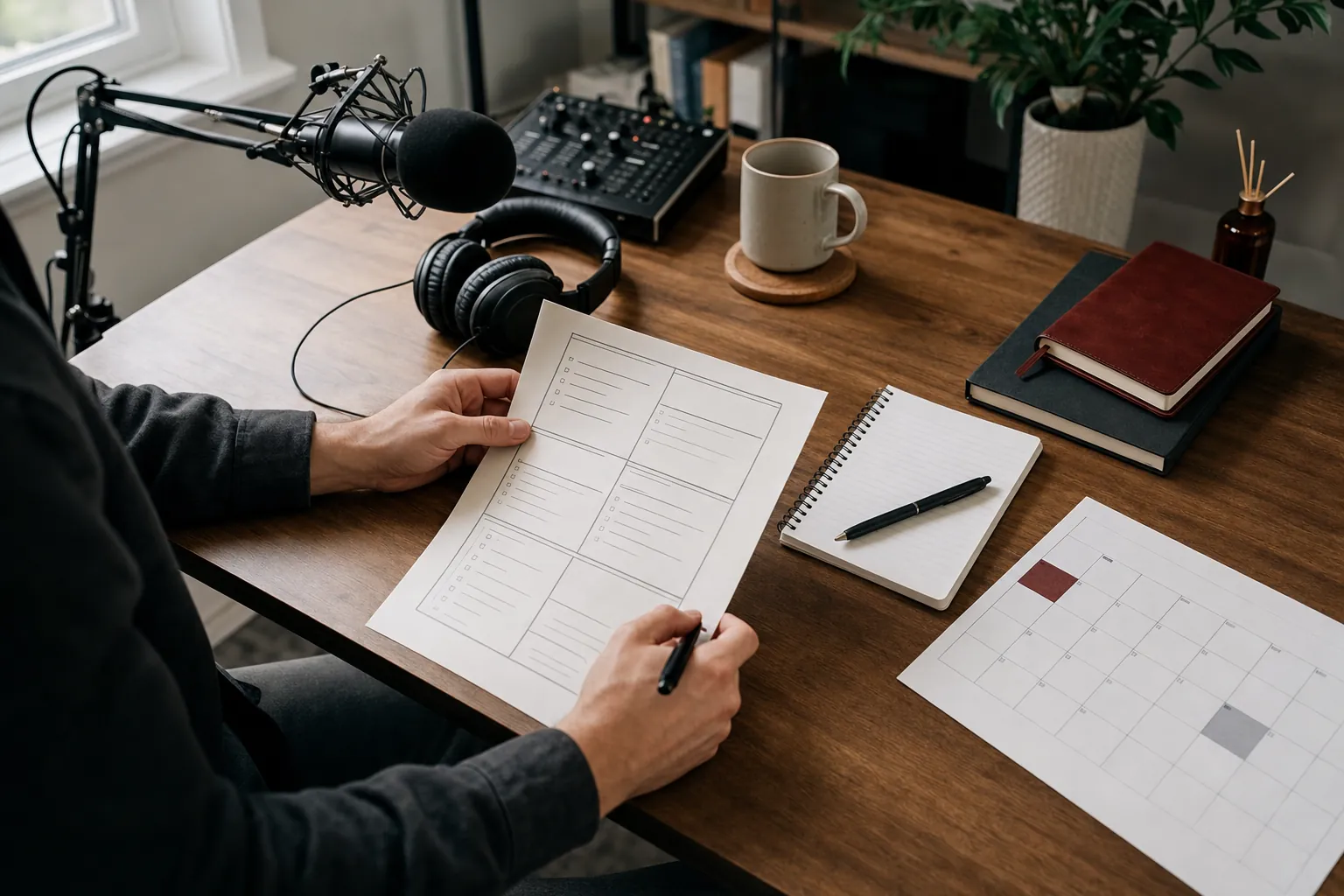
Then make a simple research map. Write the episode's central question at the top. Under it, list three to five areas that could help answer it. Add a few facts or moments under each area, then write questions that invite the guest to explain what happened, what they saw, and how their thinking changed.
Current podcasting guides from Buzzsprout, Captivate, and Riverside all emphasize preparation and open-ended prompts. The useful distinction is that preparation should create better follow-ups, not a page of questions you feel obligated to read in order.

Build questions that invite a real answer
The questions below are starting points, not a script. Adapt the language to the guest and the show. A question earns its place when it makes a specific answer more likely. "What was that like?" can be useful after an emotional moment, but it is too vague as a default. "What did you notice first when you walked into that meeting?" gives the guest a clear place to begin.
Use open questions most of the time. They encourage explanation rather than confirmation. Save a narrow question for moments when the listener needs a fact, a date, or a choice clarified. And whenever a guest offers a detail that changes the conversation, be willing to leave the prepared list behind.
Podcast interview questions to open the conversation
Open with a question that gets the guest talking about the episode's real subject. The goal is not to get the biography out of the way. It is to give the listener a reason to lean in.
- What is the question or problem that has your attention right now?
- What made this work feel important enough to pursue?
- When did you realize the usual approach was not going to work?
- What would someone outside this field misunderstand at first?
- Can you take us to the moment this story really began?
- What did you hope would happen when you started?
- What is one detail people tend to miss when they look at the finished result?
- What makes this conversation timely for people listening now?
Questions that bring out a useful story
Stories give listeners something to hold onto. Ask for moments, scenes, and decisions, then make room for the answer. Do not stack three questions together. Let the guest finish, notice the detail with life in it, and invite them to stay there.
- Can you describe what happened from the beginning?
- Who was in the room, and what did each person need?
- What was the hardest part to explain to someone else?
- What did you do next when the first plan fell apart?
- Was there a moment when your view of the situation changed?
- What did that decision cost you in time, money, or confidence?
- What did you learn only after you had made the mistake?
- What would the listener have seen or heard if they had been there?
Questions for expertise without a lecture
Experts can make a subject clearer when the host asks for examples, not just conclusions. The listener does not need every detail from a career. They need the part that helps them understand the topic in front of them.
- What does a good outcome look like in practical terms?
- What is the first decision people usually get wrong?
- How do you know when a problem needs more attention?
- What evidence would make you change your mind?
- What is the difference between the easy answer and the useful one?
- Can you give an example of this working well?
- What should a beginner focus on before worrying about the advanced parts?
- What is a sensible next step for someone dealing with this now?

Follow-up questions that make the interview better
Most strong moments arrive after the planned question. The guest gives you a phrase, a hesitation, a surprise, or a choice that deserves another minute. Follow-ups show that you are listening, and they often turn a broad answer into the part the listener remembers.
- What do you mean by that?
- Can you give me a specific example?
- What happened after that?
- What made that difficult?
- Why did that matter to you?
- How did the other person respond?
- What were you afraid might happen?
- What changed because of that experience?
- What would you do differently now?
- What should I have asked that would help people understand this better?
Notice how short those questions are. A follow-up should not be a speech disguised as a prompt. Ask the one thing the listener needs, then stop talking. A host who leaves a beat of silence often gets a more thoughtful answer than one who rushes to fill it.
Questions to close with purpose
A close should leave the listener with a clear thought, a practical action, or a new way to look at the subject. It does not need to be grand. It needs to feel earned by the conversation you just had.
- What do you hope changes after people hear this conversation?
- What is the one idea you would want a listener to carry into this week?
- Where should someone begin if they want to understand this more deeply?
- What are you still trying to work out?
- What has this work taught you about the way people make decisions?
- What gives you confidence that the next step is worth taking?
Share the plan, but do not over-rehearse it
Guests deserve to know what they are walking into. Send a short note that explains the show, the listener, the broad subject, recording logistics, and any questions that require careful preparation. This is especially important when an interview involves a technical topic, a personal story, or an organization with approval needs.
Do not turn that note into a demand for polished answers. A guest who has memorized every question can sound careful but distant. Give them the territory, then keep the recording alive enough for an answer to change shape in the room. When a guest needs more support, Mark's presentation coaching can help them prepare a clear, natural delivery without losing their own voice.
Record for the edit you will need later
A careful interview is easier to edit because the host has made clear choices in the room. Ask one question at a time. Avoid repeating the guest's answer before moving on. If a point is important but muddy, ask for it again in simpler language rather than assuming it can be fixed later.
After the recording, listen for the strongest sequence rather than preserving the order simply because that is how the conversation happened. The first answer may not be the best opening. A useful explanation might belong earlier. A repeated point may be cut without losing the guest's meaning. Mark's podcast editing support is built for that editorial work, while ongoing production support can make research, guest preparation, recording, and release a steadier process.

A simple interview plan for the next episode
- Write one sentence explaining what the listener should get from the episode.
- Research the guest for the story, decision, or insight behind that promise.
- Choose four or five subject areas, not a rigid list of every question.
- Prepare an opening question that reaches the real topic quickly.
- Write follow-ups that invite examples, details, and reflection.
- Share practical expectations with the guest before recording.
- Listen for the answer that changes the conversation, then follow it.
- Close with a question that gives the listener a useful next thought.
Make the guest useful to the listener
An interview podcast works when the listener feels they were invited into a conversation worth having. That takes more than a recognizable name or a long list of questions. It takes preparation, attention, a clear point of view, and an edit that keeps the best part of the exchange in view.
Mark helps hosts and organizations build that kind of process, from settling the format and preparing the first guest to shaping the final episode. Explore podcast launch services, video podcast production, or book a free consultation to discuss the show you want to make.
Frequently asked questions
How many questions should I prepare for a podcast interview?
Prepare more than you expect to use, but keep the final conversation focused. A useful plan often includes one strong opening, four or five subject areas, and a few follow-ups for each. The purpose is to know where the interview can go, not to force every question into the recording.
Should I send podcast interview questions to a guest in advance?
Share the broad themes and any questions that need preparation, especially when the guest needs to gather examples, dates, or documents. Keep room for real follow-ups during the recording. An interview is stronger when the guest knows the territory but has not rehearsed every sentence.
What makes a podcast interview question good?
A good question gives the guest a clear invitation to be specific. It is open enough to produce a story, example, decision, or honest explanation, but focused enough that the listener understands why the answer matters. The best questions are built from real preparation and active listening.
How do I avoid a boring podcast interview?
Do the research before recording, make the listener's question clear, and follow the most interesting detail in a guest's answer. Avoid a long run of biography questions, repeated prompts, and questions that can be answered with yes or no. A thoughtful edit can then remove detours while preserving the guest's voice.