Before a listener hears the first question, they have already started to form an impression of the show. A few seconds of music can make a podcast feel considered, lively, reassuring, mischievous or serious. It can also make the opening feel generic, overblown or oddly disconnected from the person about to speak. That is why music deserves more thought than a last-minute search for something pleasant in the background.
Good podcast music does not have to be expensive or elaborate. It has to do a clear job. It should introduce the world of the show, help repeat listeners recognize it, and then move out of the way when the host begins. The best choices are memorable without becoming the main event.
Start with the feeling you want to establish
Think about the promise of the show before thinking about genre. Is the listener arriving for practical advice, a close conversation, a sharp investigation, a celebration of culture, or a quiet place to think? The music should make that promise feel believable. A business podcast may need to sound alert, capable and contemporary. A story-led series may need more warmth or space. A comic show can carry more surprise.
This is not an argument for putting every quality into one track. A cue that tries to be important, funny, moving and futuristic at once will usually sound like a compromise. Pick the emotional center of the show. Then choose music that can hold that note consistently from one episode to the next.
Rhythm and melody matter because they are what listeners remember. A distinctive pattern can become part of the show’s identity, even if nobody could name the tune. Orchestral, acoustic, contemporary, folk, jazz and hip-hop influences can all work. The question is whether the sound belongs to this podcast and whether it will still feel right after the twentieth episode.
Write a brief before you start listening
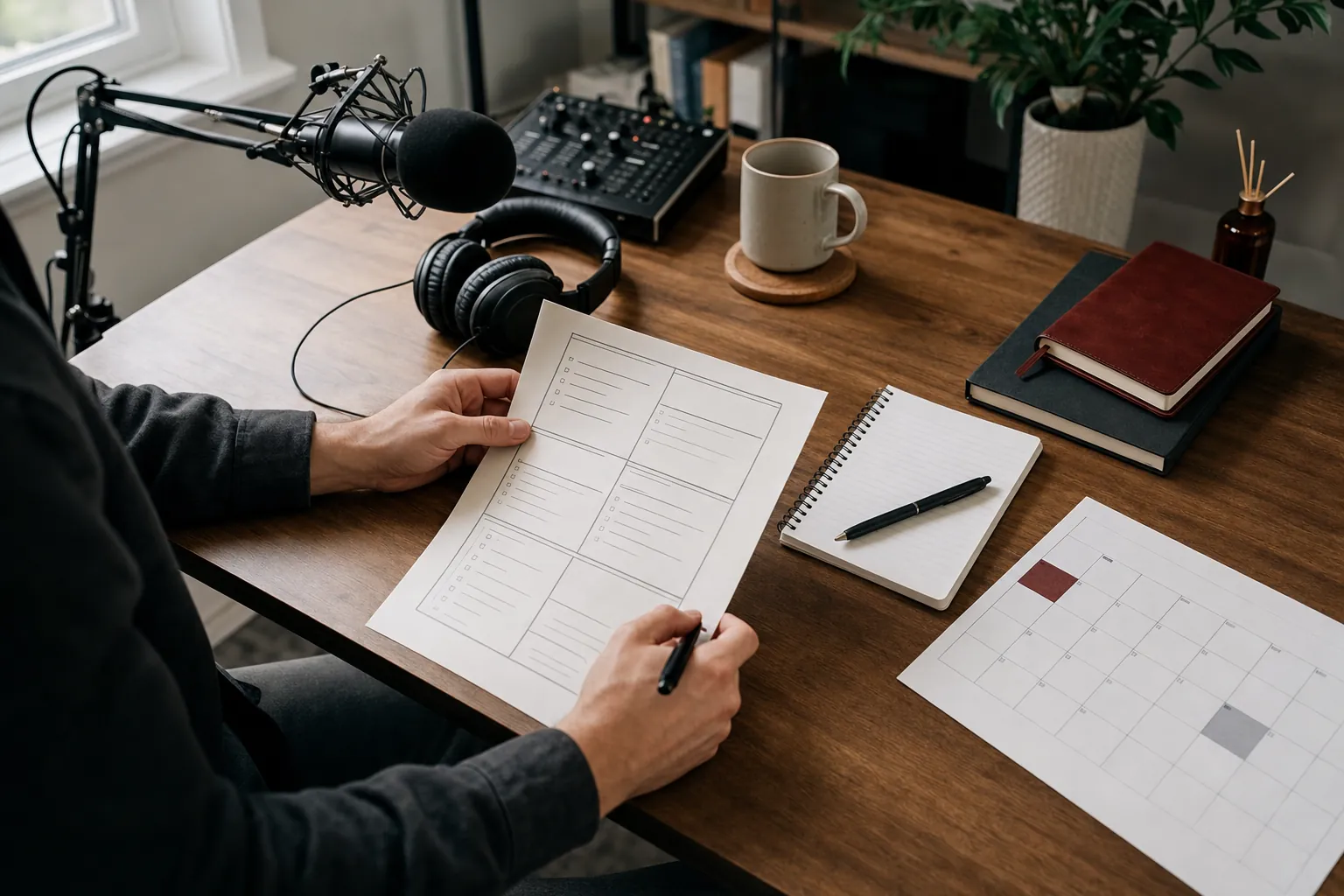
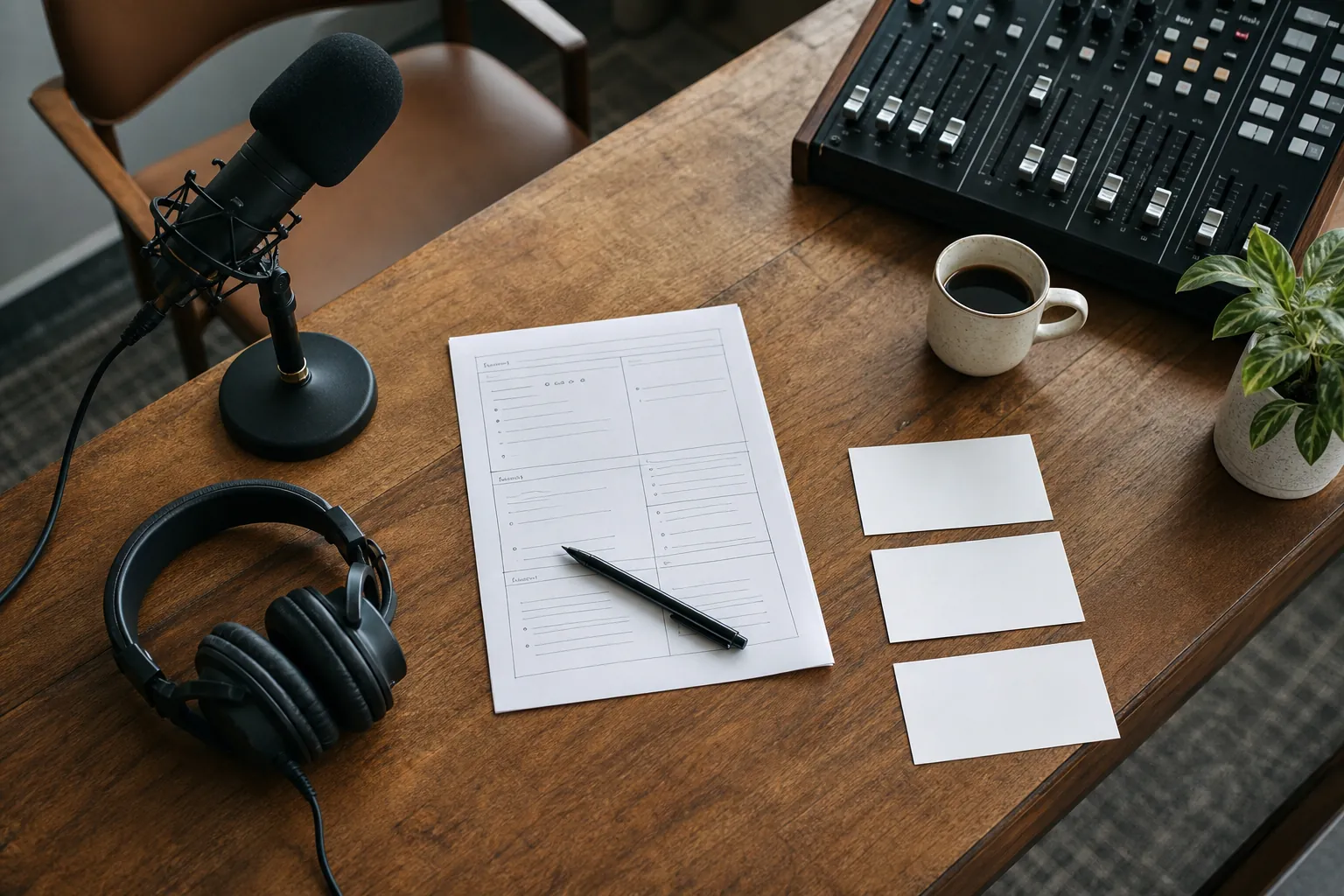
A short music brief prevents an endless search through tracks that are perfectly good but wrong for the show. Write down three or four words that describe the desired feeling, the kind of listener you want to welcome, and anything the music must avoid. “Warm, curious and intelligent, without sounding sleepy” is more useful than “something nice.” So is “confident enough for a business audience, but not corporate.”
Include the practical requirements as well. Does the host need to speak over the cue? Will there be a sponsor break? Does the show need a short social-video version? Is a regular release likely to include serious conversations as well as lighter ones? A track that sounds ideal for a trailer may be too insistent for a weekly introduction. The brief gives you a way to say no for the right reasons.
It also makes collaboration easier. A producer, editor or composer can respond to a clear description of the job, rather than trying to guess what “a little more energy” means. The result is not a rigid formula. It is a shared standard that lets everyone judge the music against the same promise.
Choose music that leaves room for a human voice
Podcast music has a practical constraint that concert music does not: people need to speak over it. The opening may begin at full energy, but it should quickly offer a quieter passage where the host can welcome the listener, name the subject and explain why this episode matters. If the music has no room to breathe, the voice-over will either be hard to hear or the track will have to be cut so abruptly that it loses its purpose.
Instrumental music is usually the safest choice. Lyrics compete with the words the listener came for, particularly when the host is speaking quickly or introducing a guest. A short vocal sting can be useful as punctuation, but it should be the exception. The host’s words, not the music’s, carry the opening.
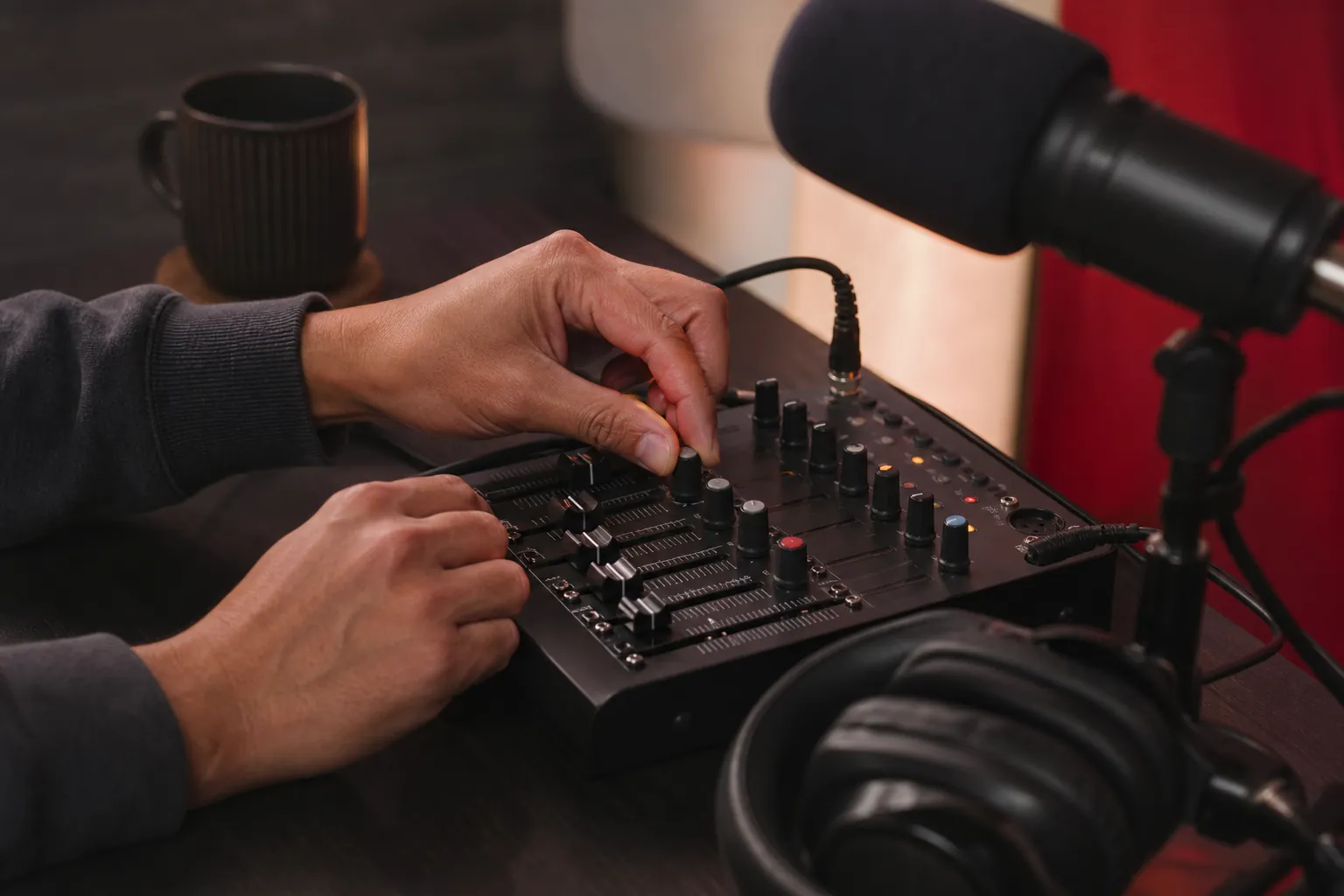
Listen for shape as well as sound. A useful theme begins with confidence, settles down for the introduction, and gives the editor a few clean options for cutting it short. It should work as a six-second identifier, a 20-second opening and a lower bed beneath a short announcement. Flexibility is not a technical nicety. It is what keeps a theme from becoming a problem every time the show needs a different kind of introduction.
Plan the handoff between music and speech
The most polished music cue can still feel clumsy if the handoff is wrong. Give the host a clear moment to begin, rather than asking them to talk over the loudest or busiest part of the track. A small dip in level, a change in rhythm or a held note can create the space for an opening sentence to land. That transition is part of the writing and recording plan, not only an edit made after the fact.
It helps to rehearse the introduction with the music in place. The host may need to pause for one beat longer, begin with a shorter phrase or save a key point until the bed has fallen away. These are modest adjustments, but they change how assured an opening feels. The listener should not be wondering whether they are meant to listen to the music or the voice.
Apply the same thinking to the close. If the final call to action needs to be remembered, let the host speak it cleanly, then let the music have the last word. When the music rises too early, the instruction disappears. When it waits too long, the ending loses momentum. A good close feels finished because both elements have been given their proper space.
Give each part of the episode a clear purpose
The opening theme is the show’s front door. It establishes the identity and sets the temperature: trustworthy, cool, safe, laid-back, dramatic, creative or surprising. Start with the most recognizable part of the cue, then let it ease back. The listener should feel that the host is arriving in a world that has been prepared for them.
A mid-roll or break has a different job. It marks a transition, gives the listener a breath, and supports a sponsor message or a change of subject. It often works best when it is drawn from the opening theme, perhaps with a different edit or a related rhythm. That connection helps the episode remain one piece of work rather than a conversation interrupted by unrelated sound.
The end theme should be decisive. It is the final nudge that makes a listener remember the show, follow it, share it or return next week. A related passage from the opening music is often ideal, but look for a real ending. Music that trails off with an unresolved question can make a finished episode feel as if someone forgot to close the door. Let the host complete the final invitation, then bring the music up with purpose.
Test the music inside a real episode
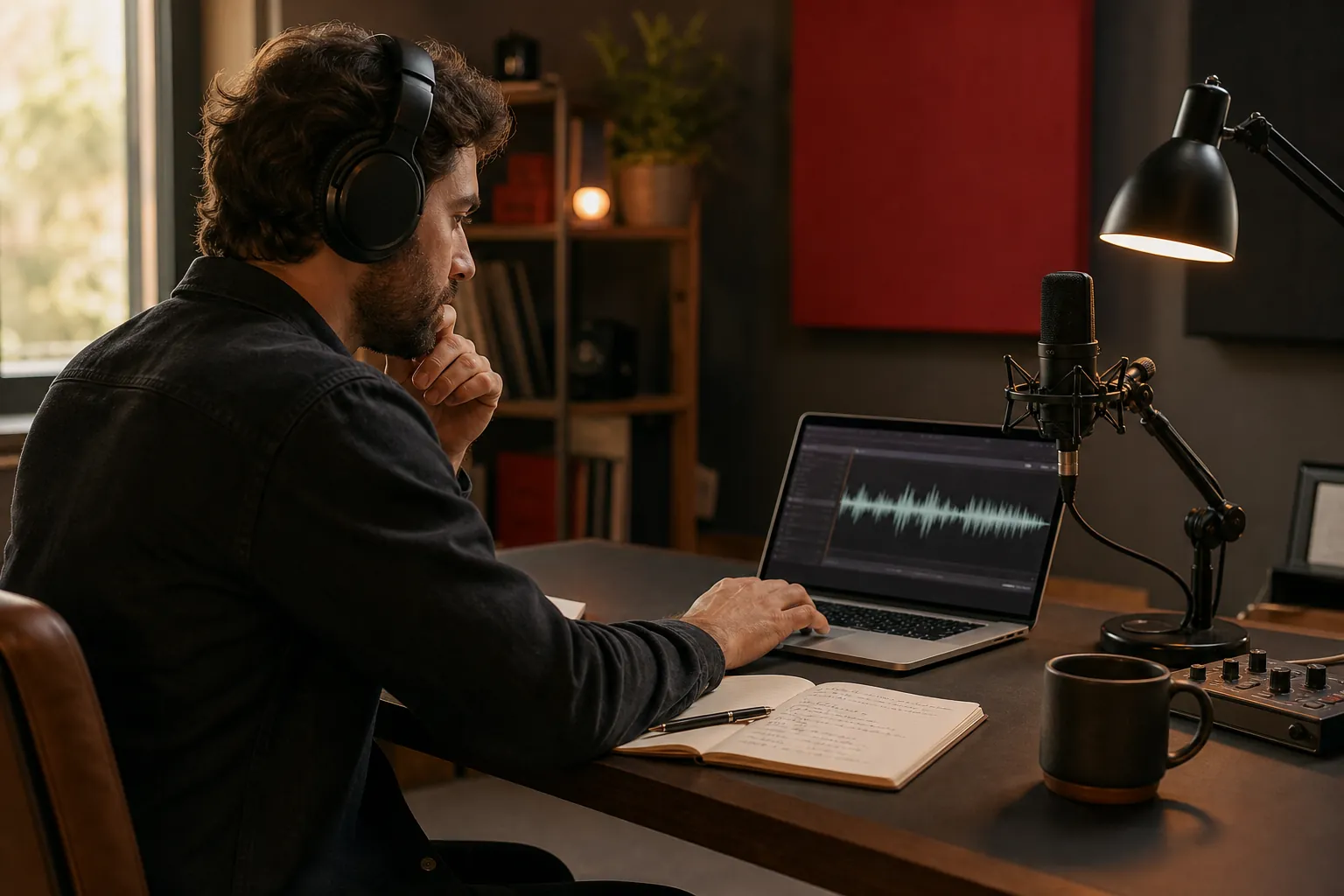
Do not approve a cue only by listening to it on its own. Put it against a real host introduction, a guest clip and a closing call to action. Listen on headphones, on a phone speaker and at a low volume in an ordinary room. You are not looking for a perfect soundtrack in isolation. You are checking whether the music makes the spoken work clearer, more inviting and easier to remember.
This test often reveals small but important decisions. The cue may need to start half a second later. The host may need a shorter introduction. The lower section may be better for a sponsor read than for the opening. You may discover that a great track asks too much of the voice, or that a simpler one creates exactly the room the episode needs.
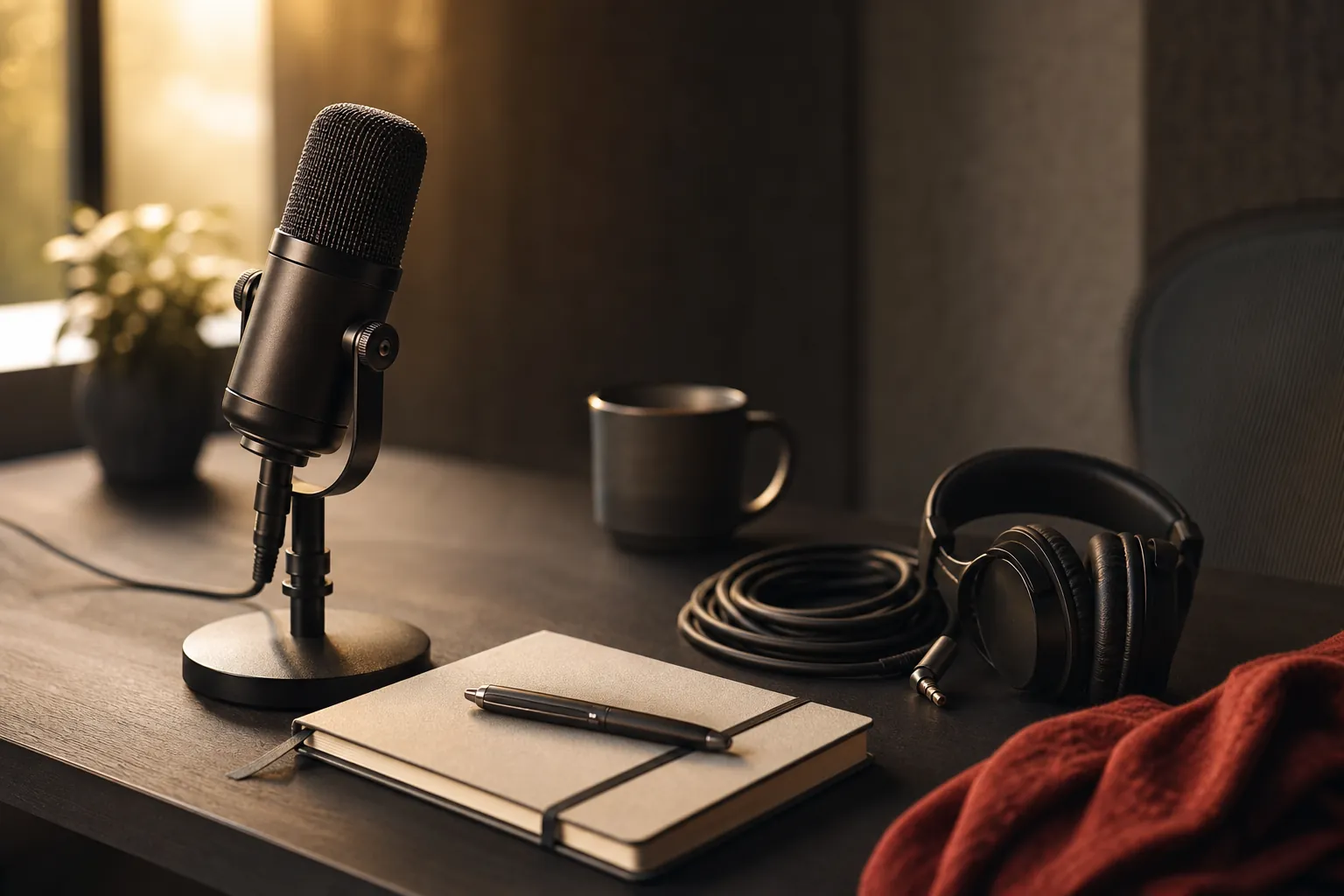
Once the music is in place, keep the treatment consistent. Similar opening lengths, similar fades and a predictable close make a show feel reliable without making it feel mechanical. The listener may not consciously notice the consistency. They will notice when it is missing.
Make the choice serve the show, not the producer
There is a temptation to choose music that advertises taste. The cleverest track, the most cinematic build or the most fashionable sound can be satisfying in a first listen. But a podcast theme has to live with the show. It needs to support different guests, different topics and different moods without making every episode feel like an advertisement for the same musical idea.
The better question is simple: does this music help the listener understand what kind of time they are about to spend? If it does, and if it gives the host room to be heard, it is doing more than filling silence. It is building an identity that becomes more valuable with repetition.
Bring editorial judgment to the sound of the show
Music is one part of a larger editorial decision. It works best when the theme, host introduction, episode structure and final invitation all feel as though they belong together. Mark can help shape that complete sound, from a pilot and host coaching to the editing and production decisions that make a series easier to follow. Explore podcast launch support, production services, or start a conversation about the show you are making.
Frequently asked questions
Should podcast theme music have vocals?
Usually, no. Instrumental music gives the host room to speak and makes short edits much easier. A very brief vocal sting can work when it is part of an established identity, but it should never compete with the introduction.
How long should podcast intro music be?
Long enough to establish the show, then short enough to let the host get on with it. A useful cue has a strong opening, a natural point to lower beneath the voice, and an edit that can work in a few seconds as well as in a longer introduction.
Can opening and closing music be the same?
Yes. In fact, using different sections of the same piece often gives a show a more coherent identity. The ending should feel like a conclusion, not like music fading away because the conversation has run out.