A podcast introduction has one job before any music, housekeeping, or biography gets involved: help the right listener understand why they should stay. It is the bridge between pressing play and trusting the episode enough to give it their attention.
That does not mean every opening needs a dramatic teaser. A thoughtful interview can begin calmly. A specialist show can begin with a useful question. What matters is that the introduction gives the listener a clear sense of place, purpose, and direction, then makes room for the actual conversation.
Know which kind of opening you are writing
People often use “podcast intro” to mean three different things. A show identifier is the short, repeatable line that tells listeners the name and promise of the program. An episode opening is the part that explains why today's subject matters. A trailer is a separate invitation for someone deciding whether to follow the whole show.
Those pieces can sit next to one another, but they should not be asked to do the same work. The show identifier can remain stable. The episode opening should change because the listener needs a specific reason to hear this conversation. A trailer needs a wider promise about what the series will deliver. Mark's guide to making a podcast trailer is useful when you are preparing that third, broader piece.
Before writing, decide which opening you need. If you are about to record an interview, you probably need a short episode introduction and a guest introduction. If you are finalizing a new show, write a simple show identifier as well. Keeping them separate prevents a common problem: a generic welcome that says the name of the show but gives no reason to hear this episode now.
Start with the listener's question
The first useful line is rarely “Welcome back.” It is usually the question, tension, or decision that brought the listener to the episode. What will they understand by the time the conversation is over? What change, problem, or story gives this guest a reason to be here?
Write the answer in one sentence before you write the introduction. A leadership show might promise a candid look at how a manager handles an unpopular decision. A history show might open with the strange fact that changes how a familiar event is understood. An interview show might name the difficult question the guest has spent years working on. That sentence is the spine of the opening.
It also gives you a useful editing test. If the first minute does not make the episode's promise clearer, it may be atmosphere, background, or a host thought that belongs later. The CDC's audio script guidance makes the same practical point: write for the ear, not the page. Listeners cannot scan backwards to find the sentence that mattered.

Use a simple podcast introduction script
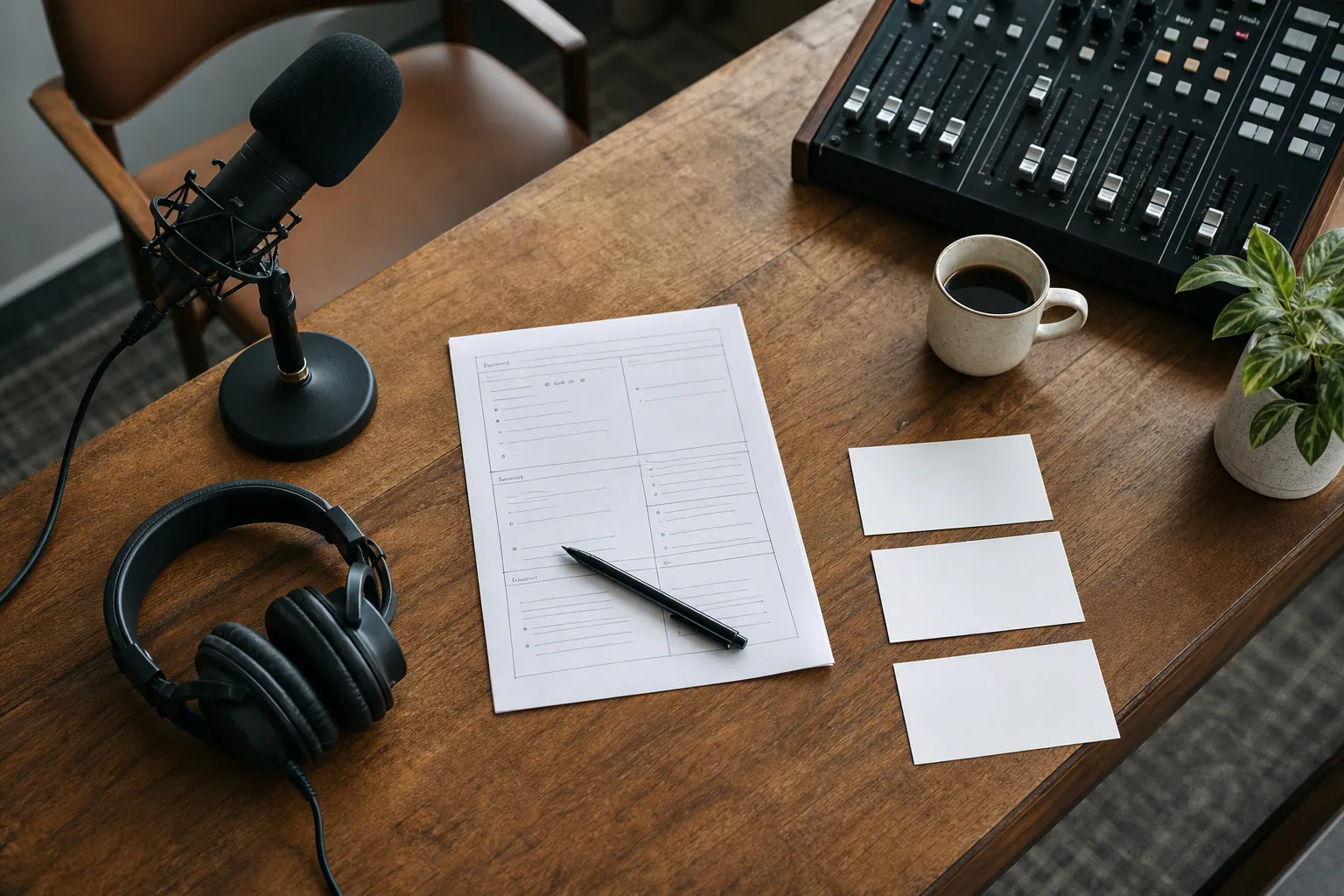
A script is not a cage. It is a way to hear whether an opening has a clear shape before the microphone is on. For most interview, expert, and organization-led shows, this simple sequence is enough:
- Hook: name the question, moment, or tension.
- Show identifier: say the name of the show and its one-line promise, if the listener needs it.
- Episode promise: explain what this conversation will help the listener understand.
- Guest bridge: say why this particular person can help answer that question.
- First question: move into the conversation without another warm-up lap.
Here is the structure in plain language: “This is [show name], where we [show promise]. Today, we are asking [episode question]. [Guest name] has spent [relevant experience] working on that question. I wanted to start by asking [first real question].”
Use the brackets as decisions, not copy. The guest's experience should be relevant to this episode, not a complete résumé. The promise should be something the episode can actually deliver. The first question should be strong enough that the conversation begins when it is asked, rather than after five more minutes of scene-setting.
Introduce a guest for the conversation, not the conference program
A guest introduction often becomes a list of credentials. Credentials can build trust, but they rarely create curiosity on their own. A listener does not need every job title before they hear the first question. They need to know why this guest is the person to help make sense of this particular subject.
Choose one or two details that connect the guest to the episode. “She led the team that had to make the decision we are discussing today” is more useful than a chronological biography. “He has spent two decades reporting from the communities affected by this policy” gives the listener a reason to hear his perspective. The rest can emerge naturally as the guest tells stories and answers follow-ups.
Send the introduction to the guest before recording when there is any sensitivity around titles, pronunciation, or context. It is a small act of preparation that avoids an awkward correction at the start. Mark's guide to briefing podcast guests can help with the larger preparation package, including expectations that make the recording feel more settled.

Write for the voice you will actually use
Writing that looks polished on a page can sound stiff in headphones. Read every introduction out loud at normal speed. Notice where you run out of breath, where a sentence needs three commas, or where you would never use the word in a real conversation. Those are editing cues, not performance failures.
Short sentences help. Concrete nouns help. So does leaving a little space for the host's natural voice. You do not need to script every word in the episode, but the opening benefits from enough preparation that the listener feels guided from the beginning.
Keep music and sound design in proportion. A brief cue can help the listener recognize the show. It should not make them wait while the episode's real value sits on the other side. The Apple Podcasts guidance on trailers is a good reminder that the listener's decision comes first: tell them what they can expect, then let the material support that promise.
Record the opening after the conversation when that helps
It can feel backward, but the best time to record an introduction is often after the interview has been edited. At that point, you know what the guest actually said, where the strongest moment lands, and what the listener will take away. The opening can promise the real episode instead of the episode you hoped to make.
Try listening through the edit with a note beside you. Write down the moment where the conversation becomes alive, the question that changes its direction, and the detail you want a new listener to understand. Then write the introduction from that evidence. This is especially useful when an interview takes an unexpected, better turn.
There is still value in preparing before the recording. A clear plan produces better questions and a calmer host. Mark's podcast interview questions guide shows how to prepare prompts that make room for real stories and follow-ups. Just do not assume the final introduction has to be locked before you have heard the conversation.

Edit the opening until it earns the next minute
Once you have a recording, listen as if you have never heard the show. Can you tell who the episode is for? Do you understand what it is about? Does the guest introduction explain why this person matters? Is there a point where the opening starts repeating itself?
Remove anything that postpones the answer. That might be an extended host biography, a long list of links, an inside joke, or a sentence that says the subject is important without saying why. You can still keep warmth and personality. The aim is not to make every opening sound like an announcement. It is to keep the listener oriented.
Listen on the device where you expect people to hear the show. A line that feels clear in a treated room can be harder to follow while someone is walking, driving, or making dinner. The Spotify for Creators overview of trailers similarly emphasizes a focused explanation of what listeners can expect. The same discipline serves an episode opening.
Three opening mistakes worth removing
Starting with the host's full biography. A new listener may care about the host's experience, but they care about the episode first. Give the shortest useful credential, then let the voice and questions demonstrate the rest. If a personal story explains why the host is asking this question, make it part of the episode rather than a ritual that returns unchanged each week.
Promising a conversation that does not arrive. “We are going to get into a lot today” is not a promise. Name the subject, the tension, or the decision. Be as specific as the episode allows. A useful opening does not need to reveal every turn, but it should not ask listeners to take its value on faith.
Using every available element at once. Music, a show identifier, sponsor copy, a guest bio, a recap, and three announcements can all be individually reasonable. Together, they can put the conversation too far away. Decide which one has the job of getting this listener into this episode, and move the rest to a better moment or remove it.
When you are unsure what to cut, make two versions. Keep one exactly as written. In the other, remove the first sentence, the last sentence, and any line that could be said about almost any episode. Record both versions and listen the next day. The stronger one usually makes its promise sooner, while still sounding like the host rather than a template.
Make the introduction part of a sustainable process
A good opening does not need to be invented from scratch every week. Keep a small episode brief with the listener question, the guest's relevant experience, the strongest moment in the recording, and the first question. That gives the host and editor enough information to write a clear introduction without turning it into a last-minute scramble.
For a new show, test the process with a pilot. Write the opening, record the conversation, edit it, then revisit the opening. If the work feels too heavy for the release rhythm you want, simplify the format before the first public launch. The right system leaves room for editorial judgment rather than asking everyone to rescue the episode at the finish line.
Mark helps hosts and organizations build that kind of process, from the first pilot to ongoing podcast production. If you have a good subject but need the opening, interview, and release process to hold together, book a free consultation to talk through the show.
Frequently asked questions
How long should a podcast introduction be?
Long enough to orient a new listener and make a clear promise, then short enough to get out of the way. For many episodes, that means a concise opening rather than a long preamble. The better test is whether every sentence helps the listener understand why this conversation is worth their time.
What should I say when introducing a podcast guest?
Introduce the guest through the subject of this episode. Name the experience or perspective that makes them useful to this particular listener, then move into the first question. Save the full biography for the conversation, where its details can become part of a real exchange.
Do I need music in a podcast introduction?
No. A short musical cue can establish a recognizable identity, but it should support the voice rather than delay it. If the music is doing more work than the spoken promise, simplify the opening and hear how the episode feels without it.
Should every episode use the same introduction?
Keep the show identifier consistent if it helps listeners recognize the program, but rewrite the episode-specific opening. A returning listener still needs a reason to hear this episode, and a new listener may be arriving without any earlier context.