A podcast trailer is a listener’s first chance to decide whether a show deserves a place in their week. It is not an announcement with music underneath. It is a short piece of editorial work that makes the show’s promise clear, lets its personality come through, and gives someone a reason to follow before the first full episode arrives.
That is especially useful when a new show has not yet built a back catalogue. A clear trailer can introduce the subject, establish the host’s point of view, and make the launch feel real. The best ones do not try to say everything. They choose the most compelling reason for the right listener to care, then leave them wanting the first episode.
Decide what the trailer needs to do
Before writing a line, choose the trailer’s job. A brand-new show usually needs to answer four questions quickly: Who is this for? What will we explore? Why is this worth the listener’s time? What should they do next? A seasonal trailer may have a different job, such as setting up a new investigation or revealing what has changed since the last run.
Write one clear sentence for the listener you want to reach. “People interested in business” is not enough to guide a trailer. “Independent restaurant owners trying to make sense of rising costs” gives the host a specific person to speak to. It also makes it easier to reject broad language that could describe a hundred other shows.
Then write the show promise in plain language. It should describe the experience, not just the topic. A promise might be, “Each week, a working chef and a restaurant owner compare the decisions behind a sustainable kitchen.” That tells the listener more than “A podcast about food.”
Give the listener a real taste of the show
People do not follow a podcast merely because they understand the premise. They follow because they can imagine listening. Let the trailer sound like the show. If the series is driven by candid interviews, include a short exchange with energy or insight. If it is a reported narrative, use a telling moment from the tape. If it is a solo expert show, speak directly in the tone you will use week after week.
The clip does not need to be the cleverest line in the recording. It needs to reveal something about the experience. A guest’s surprising detail, a hard question, a moment of warmth, or a clearly stated problem can all work. Avoid using a clip only because it sounds dramatic when it is not representative of the show itself. That creates the wrong expectation before episode one.

Use a simple podcast trailer structure
A trailer needs shape, even when it feels conversational. Apple’s creator guidance recommends introducing the show and hosts, sharing highlights, then creating a little curiosity before the close. Its suggested maximum is two minutes, which is a useful ceiling rather than a target. Apple’s trailer outline is a sensible final check when you are trimming.
For most shows, this short structure is enough:
- Open with the listener’s question. Start with a tension, a useful idea, or a line that makes the subject feel immediate.
- Name the show and the promise. Say what the audience will get, in language they can understand without knowing the host already.
- Offer proof. Use a short clip, example, or detail that shows the show can deliver what it promises.
- Make the next step clear. Say when the first episode arrives and invite the listener to follow or subscribe.
A useful first draft might sound like this: “What does it take to keep a neighborhood restaurant open when every cost is rising? I’m [name], and each week I speak with the people making that decision in real time. You will hear the trade-offs behind the menu, the payroll, and the next hard call. Follow now, and join us for the first episode on [date].” The details should change, but the discipline is the same: make one clear promise and support it.
Write for the ear, not the page
Trailer copy is usually heard once, often while someone is doing something else. Write sentences that can be understood in one pass. Lead with active verbs. Replace abstract claims with a detail that earns them. “Conversations that matter” is a slogan. “How a public defender decides which case to take to trial” gives the listener a real reason to lean in.
Read every draft aloud before you record it. You will hear the phrases that are too formal, the sentence that asks the listener to remember too much, and the place where the thought ends before the breath does. A written script is useful because it protects the purpose of the trailer. It should still leave room for the host to sound like a person, not a press release.
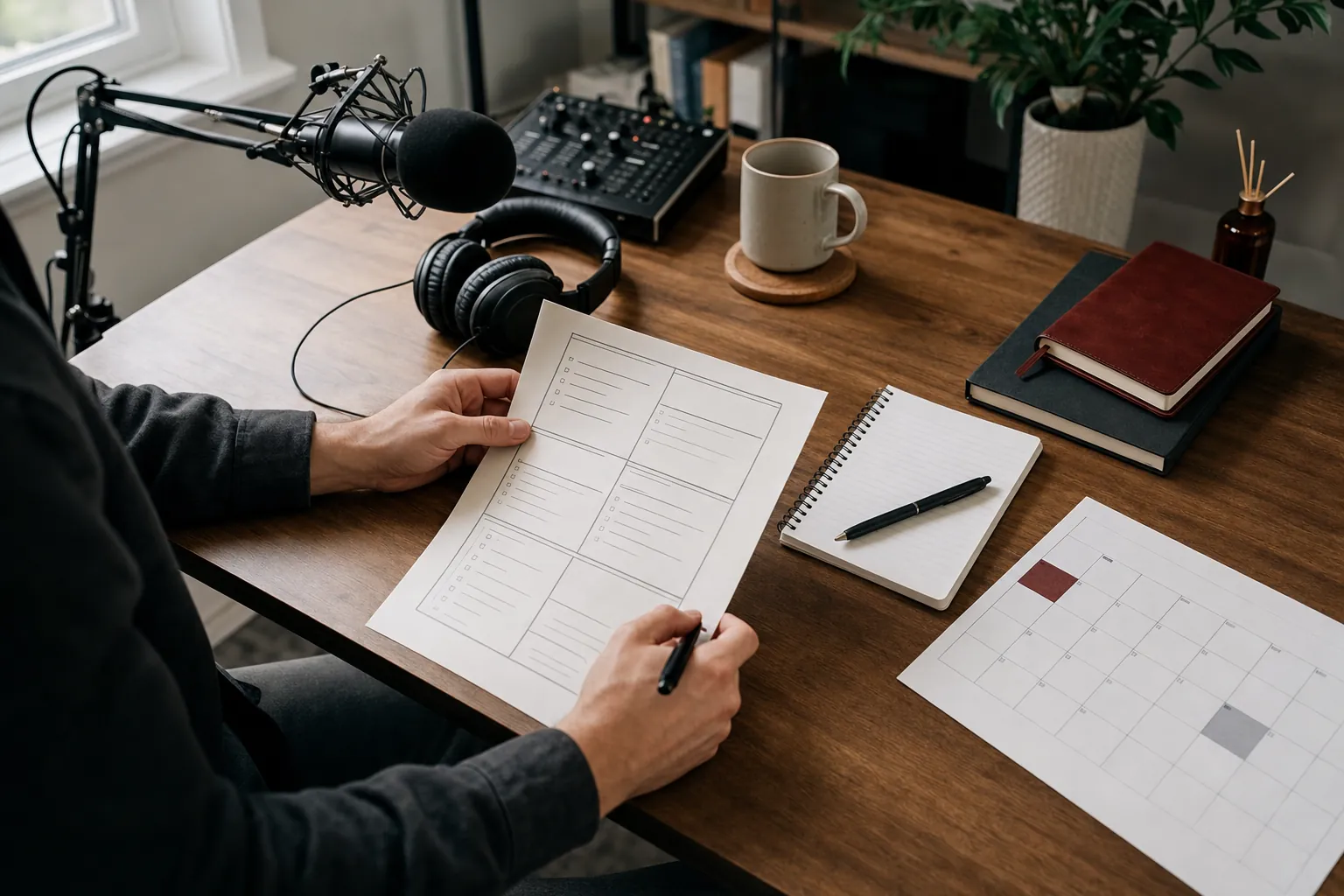
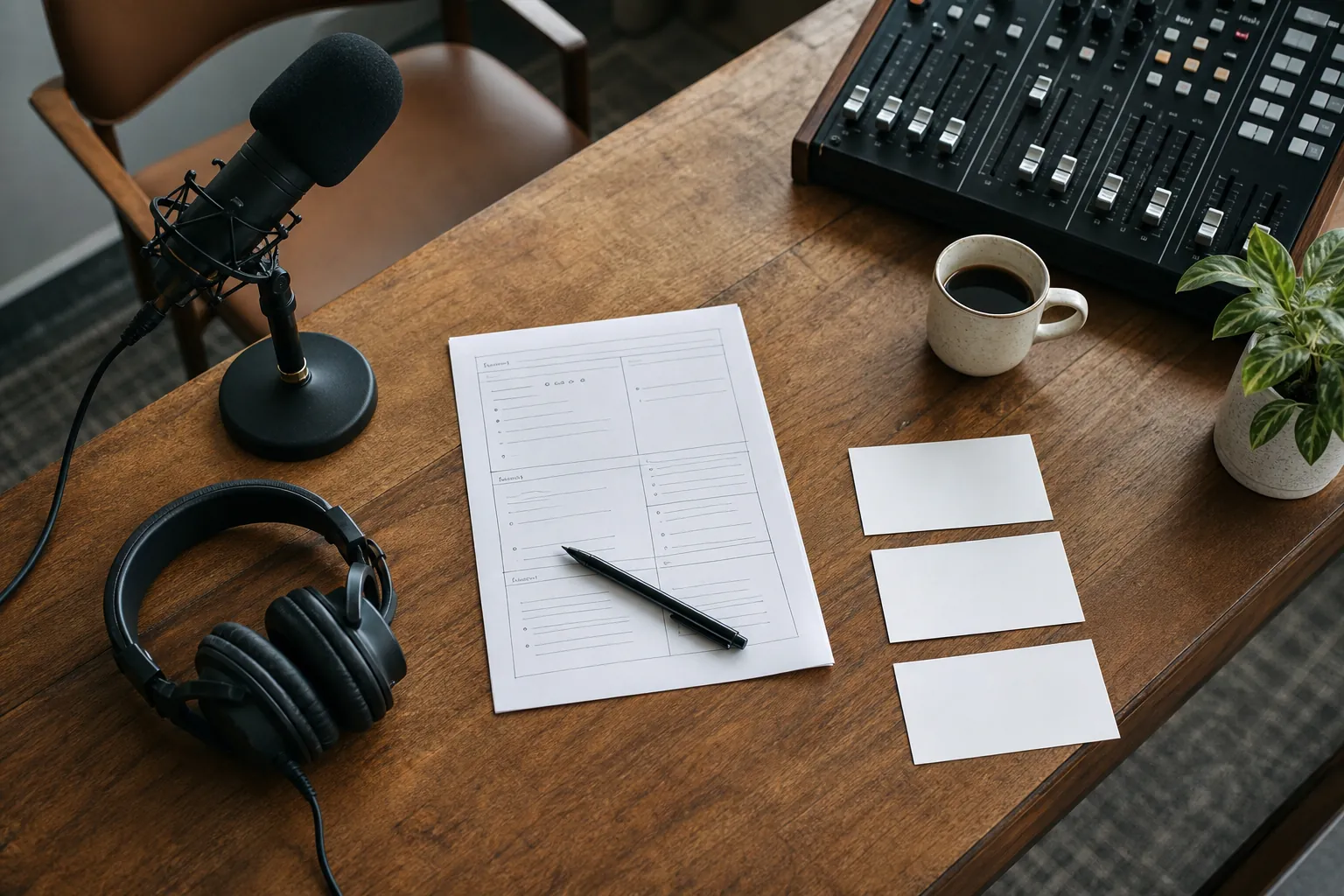
If you are building the show from scratch, a flexible podcast script template can help you prepare the opening, key beats and close without flattening the natural voice of the recording.
Record it like the first episode matters
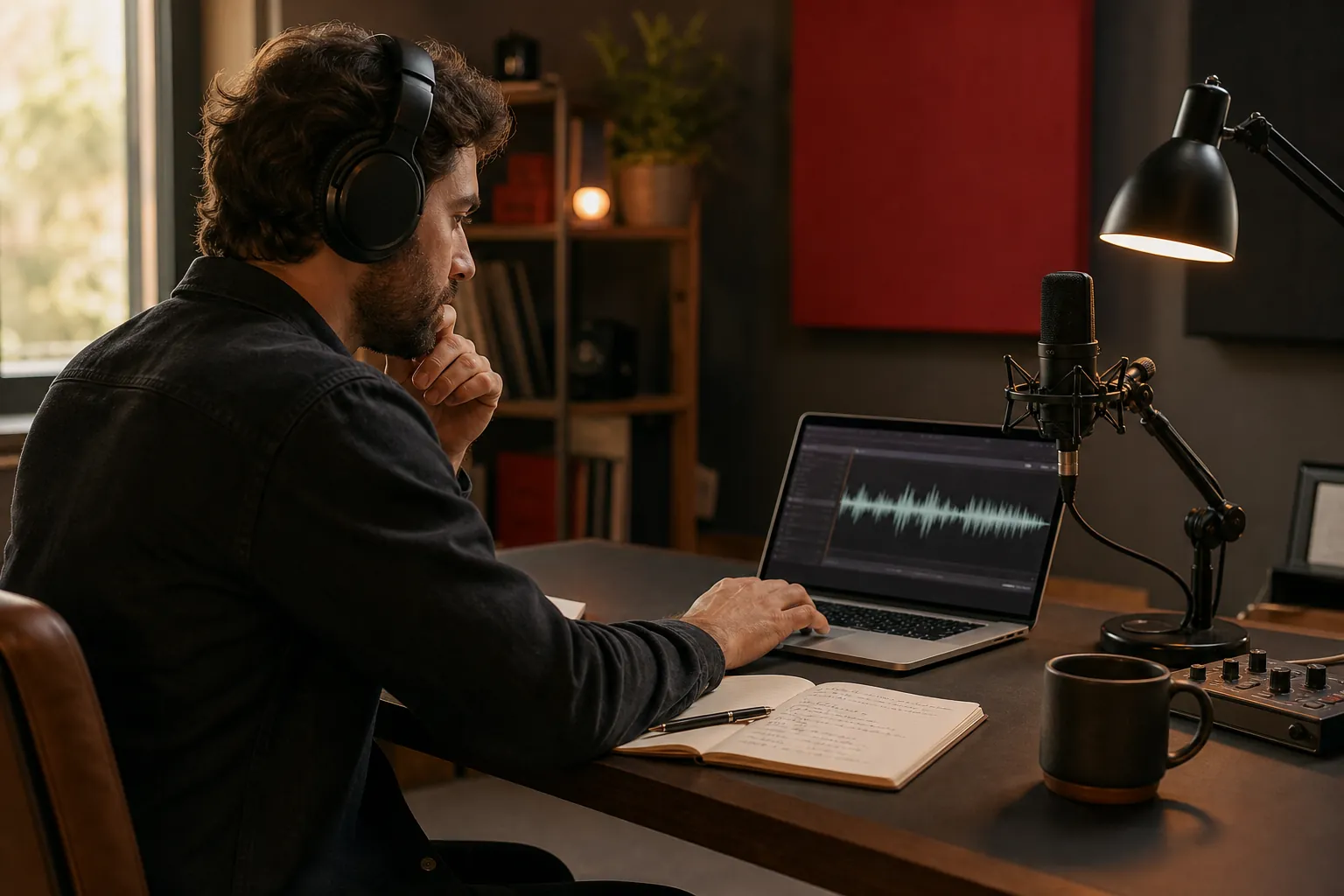
A trailer is small, but it represents the standard of the series. Record in the same environment and with the same care you want for the main show. Choose a quiet space, place the microphone consistently, wear headphones, silence notifications, and make a short test recording before the real take. The listener may not know why the sound feels settled, but they will notice when it does not.
Do more than one take of the spoken copy. The most polished read is not always the most useful. Listen for a take that feels present and clear, with enough pace to move the listener forward. If the show will include guests, a small exchange can be more inviting than a host explaining the whole concept alone.

Edit for clarity and momentum
Editing is where the trailer becomes a promise rather than a pile of good material. Put the strongest moment early. Remove repeated explanations. Give a clip enough room to land, then move on before its context disappears. If you add music, use it to support the rhythm rather than cover the words. The speaking should always win.
Listen on headphones, a phone speaker, and wherever your audience is likely to hear it. The test is not whether the edit sounds expensive. The test is whether a new listener can understand the show, remember why it is for them, and hear exactly what to do next. Ask someone who does not already know the project to listen once, then tell you what the show is about. Their answer will show you what the trailer actually communicates.
Keep the trailer honest about the show you can deliver. Do not promise a weekly investigation if the team can only make one considered episode a month. A clear, realistic rhythm earns more trust than an ambitious announcement followed by silence.
Publish the trailer before the launch rush
A trailer can give a show an earlier public home while the opening episodes are being finished. It also gives guests, partners, and colleagues something concrete to share. Prepare the cover art, show description, platform details and direct link before you ask anyone else to help spread the word.
Platform requirements change, so verify the current steps with the platform rather than relying on an old launch checklist. Spotify for Creators explains that hosted shows receive an RSS feed after the first episode is published, and that feed can be enabled for distribution elsewhere. Spotify’s current RSS instructions are worth checking alongside your hosting provider’s guidance. If your host lets you mark a piece as a trailer, use that setting so the audience and platforms understand what they are hearing.
Give yourself time for platform processing and a final listening pass. A trailer published one day early is much more useful than one finished at the exact moment the public announcement goes out.
Turn one trailer into a practical launch asset
The audio trailer can do more than sit at the top of a show page. Pull a short, truthful clip for social channels. Use the same central promise in your launch email. Give guests or partner organizations a short description, a link and an image they can share without extra work. The message should stay consistent, but each version can suit the place where it appears.
Do not mistake activity for a release plan. Pick the channels where the intended listener already pays attention, make one clear invitation, and give the show time to find its audience. A trailer works best when it supports a strong first episode and a sensible release rhythm, not when it is asked to do the work of a whole marketing campaign by itself.
Before you share it widely, ask one final practical question: could a person who has never met the host repeat the show’s premise after one listen? If not, the answer is usually not a louder introduction. It is a sharper promise, a more specific clip, or a simpler final invitation. Those choices make the trailer easier to share because the person passing it on knows exactly why it may matter to someone else.

When a producer can help
A trailer concentrates several of the hardest early decisions in one short recording: audience, point of view, host delivery, interview tape, sound, pacing and the invitation to return. That makes it an excellent place to bring in editorial support. A producer can help turn a broad idea into a listener promise, prepare a host, find the clip that proves the show’s value, and make the edit feel natural rather than promotional.
Mark McDonald helps hosts, organizations and teams make those decisions practical, from shaping a pilot through preparing the launch and editing the finished work. Explore podcast launch services or podcast production support, or arrange a free consultation to talk through the work behind your show.
Podcast trailer checklist
- Write one clear listener promise before scripting the trailer.
- Open with a question, detail or clip that makes the subject immediate.
- Name the show and explain who it is for in plain language.
- Use a real moment that represents the listening experience.
- Record more than one take and choose the most natural, clear delivery.
- Edit out repeated explanation and keep the spoken words easy to hear.
- End with the first release date and a simple invitation to follow.
- Check the final version on headphones and a phone speaker.
- Publish early enough to review platform details before launch day.
Frequently asked questions
How long should a podcast trailer be?
Keep a show trailer concise enough to hold attention while giving the listener a real feel for the show. Apple recommends keeping a trailer to two minutes or less. Many effective trailers make their point well under that limit. The right length establishes the promise, offers a meaningful taste, and stops before it explains itself twice.
Should a podcast trailer be an episode?
A trailer should be published as a trailer or bonus item when your hosting platform supports that distinction. It introduces the show before the first full episode is ready. It is useful, but it does not replace a strong launch episode because listeners still need to hear the format deliver on its promise.
What should I say in a podcast trailer?
Say who the show is for, what it explores, why the subject matters, and what kind of listening experience someone can expect. Then use a short clip, vivid question, or specific tension to make the promise tangible. End with a simple invitation to follow the show and return for the first release.
Can I make a trailer after my podcast has launched?
Yes. A trailer can introduce a new season, explain a changed format, or give a new audience an easy entry point. Start from what the show now does best rather than trying to summarize every past episode.
Photos: Jakub Zerdzicki via Pexels, Reza Tavakoli via Pexels, and Yusuf Çelik via Pexels.