There is no magic number for podcast length. The right episode is long enough to give the listener something complete, and short enough that every minute earns its place. That may be eight minutes for a sharp briefing, 25 minutes for a clear conversation, or an hour for a story that truly needs the room.
What matters is not matching the running time of a successful show in another category. It is choosing a length that fits your listener, your subject, and the production rhythm you can sustain. Make that decision early, test it in a real recording, and let the work tell you whether the format is holding together.
Start with the promise, not a stopwatch
Episode length becomes much easier to choose when the show has a clear promise. Ask what the listener should get from a typical episode. Is it a useful answer to one question? A well-prepared interview with a person whose experience adds perspective? A narrated story that takes the listener somewhere they could not go themselves?
A focused expert show can often work in a short window because the listener arrives for one useful idea. An interview show may need more time for a guest to tell a story, for the host to ask a follow-up, and for a real point of view to emerge. A narrative episode may need a different shape altogether. None of those formats is better. They simply make different promises.
Write that promise in one sentence before deciding on minutes. If you cannot explain what an episode delivers, length will become a substitute for substance. If you can explain it, the running time becomes a practical question: how long does this take when it is done well?
Choose a useful range for the format
A range is more honest and more useful than a rigid target. It gives the host and editor a recognizable shape while leaving room for an exceptional guest, a more complex subject, or an episode that reaches its natural conclusion sooner than expected.
For a short host-led briefing, five to 15 minutes may be enough to frame a problem, share a perspective, and leave the listener with a clear next thought. For an interview or conversation, 20 to 40 minutes often gives the exchange enough room to become more than a string of prepared answers. Longer episodes can work very well for an in-depth interview, a roundtable, or a reported story, provided the listener understands why they should stay with it.
These are starting points, not rules. A 12-minute episode that reaches the point is stronger than a 30-minute version with ten minutes of warm-up. A 50-minute conversation can be worth every minute when it develops a subject that could not be handled well in half the time. The goal is not to make episodes brief. It is to make them deliberate.

Know when an episode needs more or fewer minutes
The recording itself will usually tell you whether the chosen range is right. An episode may need more room when the listener has to understand a little context before the central idea makes sense, when a guest's story has a meaningful turn that would be lost in a quick summary, or when two perspectives need time to be considered fairly. In those cases, cutting simply to meet a target can leave the work feeling thin.
An episode likely needs fewer minutes when the opening spends too long announcing what is coming, when several answers repeat the same point, or when a discussion moves through every background detail before reaching the part that matters to the listener. This is common in interviews. Hosts often want to be generous to a guest, but generosity is not the same as leaving every answer untouched. A clear edit can respect the guest while making the conversation more useful.
Try a practical test after the first edit. Write a single sentence that explains what the listener will understand by the end. Then listen for the moments that build that understanding. If a section does not deepen the question, reveal a useful example, or create a necessary transition, it may not belong in this episode. It could become a follow-up question, a bonus clip, or the starting point for another recording.
The same test protects against over-editing. Some moments do not deliver a neat takeaway, but still give the listener a reason to care: a pause before a difficult answer, a specific story that brings an abstract idea down to earth, or a disagreement that makes the subject feel alive. Keep those moments when they serve the experience. The aim is not efficiency for its own sake. It is a show that has enough room to think clearly.
Build a simple episode map before recording
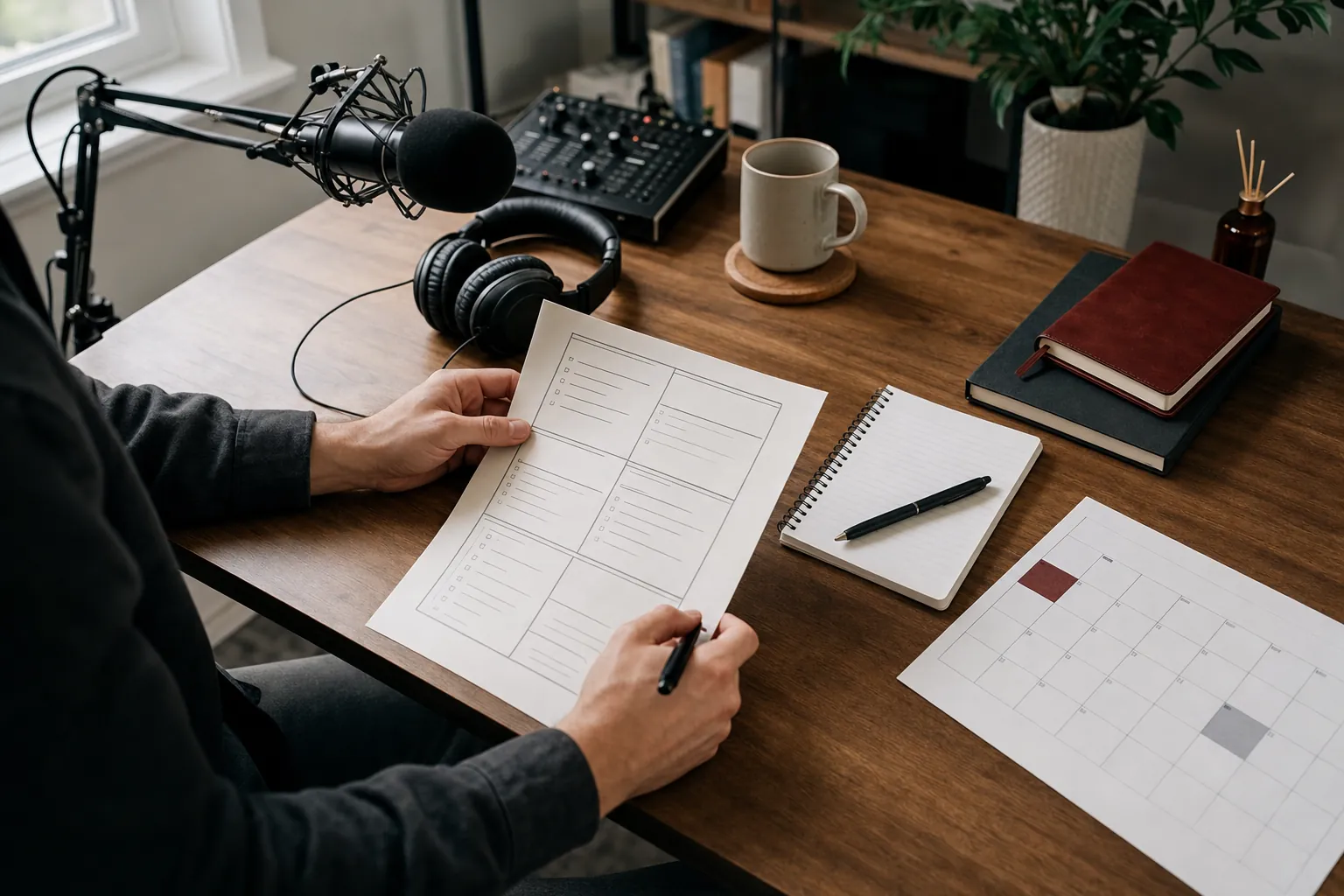
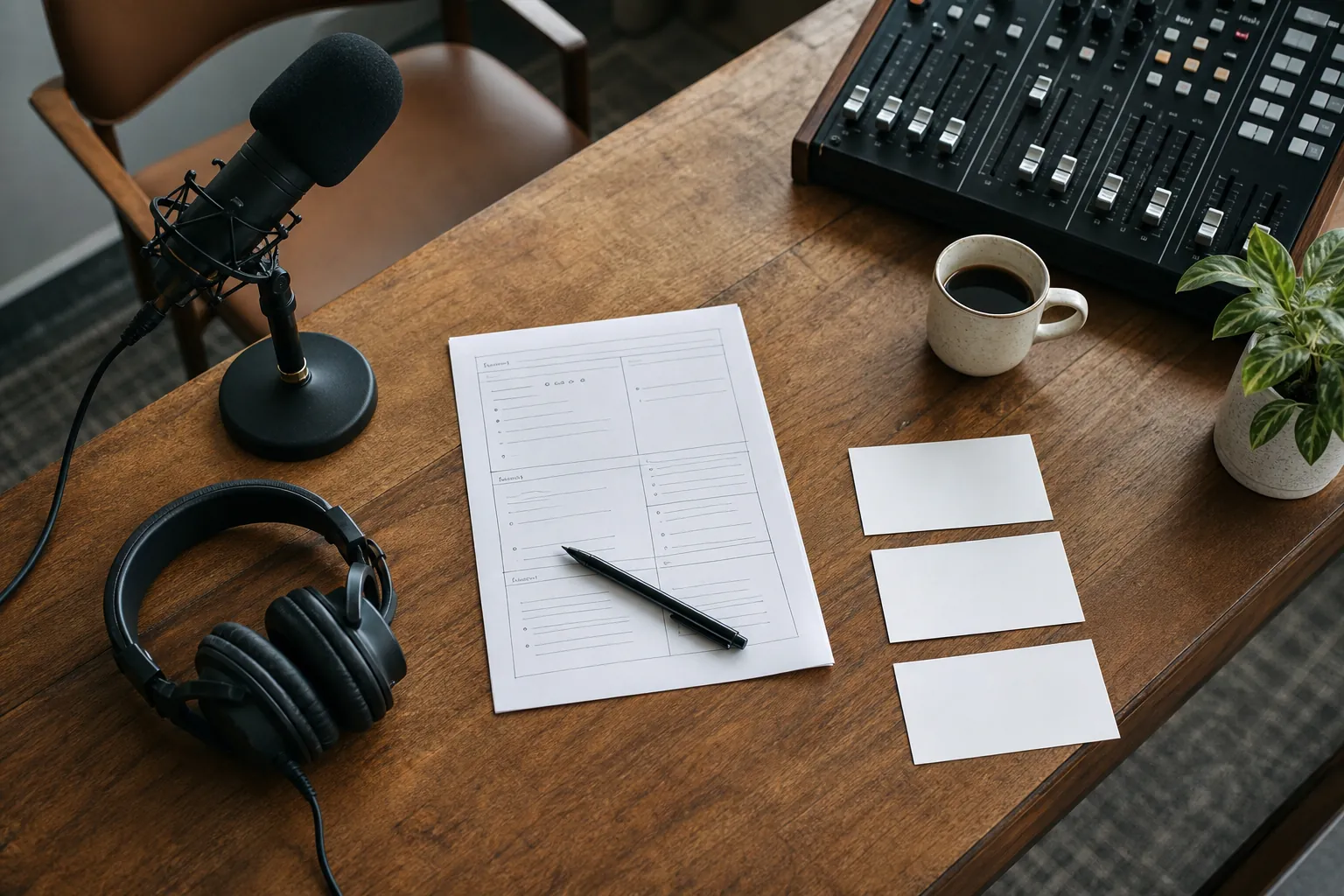
Before the microphone is on, sketch the path the episode needs to take. A host-led episode might have a quick opening, a clear question, two or three main points, an example, and a close. An interview might need a strong introduction, an opening question that gets past the biography, a middle section where the real tension emerges, and a final question that leaves the listener with something useful.
This map is not a script that prevents a good conversation. It is a way to see whether the proposed length fits the work. If the outline contains seven major ideas, a ten-minute format may force the host to rush. If it contains one clear question and two practical examples, a 45-minute target may encourage unnecessary detours.
Mark's podcast launch checklist is a useful companion for the earlier decision: who the show is for, what format suits the idea, and how the first episodes should hang together. Once that foundation is clear, the episode map gives each recording a purpose.
Test the length with a real pilot
The fastest way to settle a running time is to make one representative episode from beginning to end. Do not test only the recording. Prepare it as you would for release, edit it to the standard you want listeners to hear, write the title and description, and notice where the work actually takes time.
A pilot often reveals that the first ten minutes are too much setup, that the most useful answer arrives later than expected, or that a conversational host needs a clearer way to move from one subject to the next. It can also show that an ambitious 60-minute recording becomes a focused 32-minute episode once repeated points and pauses are removed.
That is not a reason to edit every trace of personality away. Good editing preserves thought, humor, uncertainty, and silence when those moments help the listener. It removes the material that asks for attention without returning value. The pilot lets you make that judgment before the show has made a public promise it cannot keep.
Give an interview enough room to become a conversation
Interviews are frequently planned around the guest's name rather than the listener's question. The result can be an episode that begins with a long biography, moves through familiar talking points, and ends just as the conversation starts to get interesting. Length does not solve that problem. Better preparation does.
Start by deciding what the guest can help the listener understand that no one else can. Prepare questions that invite stories, decisions, and useful specifics. Then leave enough room for follow-ups. The most revealing answer is often not the first answer. It arrives when the host notices a detail and asks the next question with real attention.
For some guests, that will produce a compact, satisfying 25-minute conversation. For others, it will justify a longer episode. The decision should be made by what the listener gains, not by a generic belief that important people require longer airtime.

Keep the release rhythm in view
Episode length is also a production decision. A longer conversation creates more recording, review, editing, fact checking, show-note writing, approval, and publishing work. A shorter format may reduce some of that load, but it can require more writing and a more disciplined host. There is no shortcut around the real work. There is only a format that makes the work manageable.
Choose the length alongside the release rhythm. A polished monthly hour-long conversation may be entirely realistic for a small team. A weekly 45-minute show may not be, especially if each episode involves guests, approvals, detailed editing, and a host with other responsibilities. A biweekly 20-minute show can sometimes serve the audience better because it arrives when it says it will.
When you are planning an opening run, pair this choice with the number of episodes you can finish before launch. Mark's guide to how many episodes to launch with explains why the first release and the production buffer need to work together.
Edit for the listener's attention
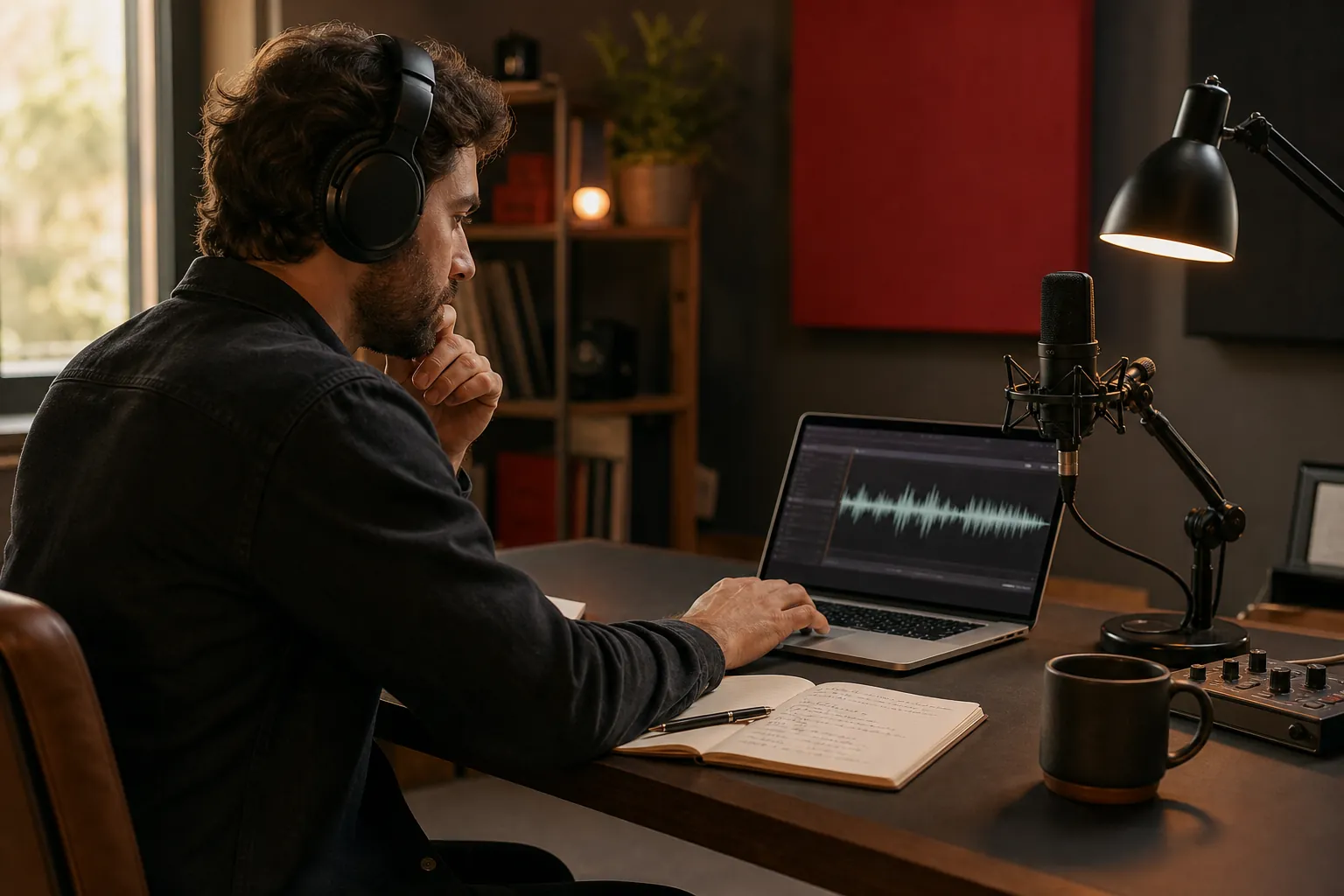
Editing is where the intended length becomes a real listening experience. It is not merely a cleanup step after a recording. It is where the episode's opening reaches the point, transitions become clear, repeated ideas are tightened, and the ending lands before the listener has started checking the time.
Listen through once for the shape of the episode. Where does the listener first understand why this matters? Where does the conversation repeat itself? Is there a section that the host and guest enjoyed making but that does not serve the subject? Then listen again for the smaller decisions: a pause that makes a statement feel considered, an interruption that needs clarity, or a transition that can carry the listener into the next idea.
A good edit does not make every show sound the same. It makes the intended experience easier to hear. For ongoing support with that work, Mark's podcast editing services can bring a consistent editorial standard to each release.

Use listener behavior without chasing every number
Once episodes are public, pay attention to the signals that help you improve the format. Which subjects prompt thoughtful replies? Which guests are shared by the people you hoped to reach? Do listeners return for the next release? Are you hearing that the show is useful, clear, surprising, or easy to fit into a routine?
Do not change the format after one quiet week or one unusually popular guest. Look for patterns across several releases. If listeners consistently respond to the sharpest 20-minute episodes, it may be worth protecting that focus. If the strongest conversations need more room, it may be better to make that longer format the norm and adjust the release rhythm around it.
The useful question is not “what length performs best for every podcast?” It is “what length lets this show make its promise often enough, clearly enough, and well enough that people want to return?” That answer belongs to the work in front of you.
Choose the length your show can keep
A sensible episode length respects both sides of the microphone. It gives the listener a complete experience, and it gives the host and team a format they can make without turning every release into a rescue mission. Begin with the promise, map the episode, test a pilot, and adjust the range only after you have heard the work in full.
Mark helps hosts and organizations make those editorial decisions before they become expensive habits. From a pilot and launch plan to ongoing podcast production, he can help you find the shape that lets a good idea stay clear from one episode to the next. Book a free consultation to talk through the show you are planning.
Frequently asked questions
What is the best length for a podcast episode?
The best length is the one that lets the episode make its point without asking the listener to wait for it. A focused answer may be excellent in ten minutes. A thoughtful interview may need more room. Choose the length from the value of the conversation, then make sure the production process can deliver it consistently.
Are 30-minute podcast episodes too long?
No. Thirty minutes can be a very comfortable length when the episode has a clear question, a useful structure, and an edit that keeps the conversation moving. It becomes too long only when the material would be stronger with less repetition, a tighter opening, or a more focused subject.
Should every episode be the same length?
A consistent range is usually more useful than an identical running time. Listeners benefit from knowing what kind of commitment a show asks of them, but a good story should not be cut short or padded just to land on an exact number. Keep the format recognizable and let the subject determine the final minutes.
Does a shorter podcast episode cost less to produce?
Often, but not automatically. A short, carefully written and tightly edited episode can take more preparation than a relaxed conversation. The practical question is how much planning, recording, editing, review, and publishing work the format creates, then whether that work fits the release rhythm you want to keep.